
Product Description
| LAMAT PIPING – Ductile Iron Grooved Fittings | ||
| Name | Rigid coupling, Flexible coupling, 90° Elbow, 45° Elbow, 22.5° Elbow, 11.25° Elbow, Split Flange, Adaptor Flange, Cap | |
| Tee, Reducing Tee(Grooved/Threaded), Mechnical Tee(Grooved/Threaded), U-bolted Mechnical Tee | ||
| Cross, Reducing Cross(Grooved/Threaded), Mechnical Cross(Grooved/Threaded) | ||
| Reducer(Grooved/Threaded), Grooved Eccentric Reducer | ||
| H.S. CODE | 735710000 | |
| Technology | Casting | |
| Connections | Grooved-Thread End, Grooved End | |
| Pressure Rate | 300PSI / 2.07MPa | |
| Size | 1” – 12” | |
| Pipe O.D. | 33.7MM – 323.9MM | |
| Surface Finish | Epoxy Powder,Painting,Galvanization,Dacromet (in Red/Orange/Blue/White Color) | |
| Design Standard | American Standard | ANSI/ASTM |
| European Standard | EN | |
| British Standard | BS | |
| Germany Standard | DIN | |
| Japanese Standard | JIS | |
| ISO Standard | ISO | |
| Thread Standard | ASME B.1.20.1 / EN15716 / DIN2999 / ISO7-1 / ISO228 / IS554 / BS EN15716 / BS 21.173 | |
| Material Standard | Ductile Iron confirms to ASTM A-536 Gr65-45-12,EN1563,JIS G5502,QT450-12 | |
| Gasket Material | EPDM,NBR or Silicon Rubber | |
| Bolts & Nuts | ISO 898-1class 8.8 | |
| Flanges Standard | PN series or Class series | |
| Packages | Plywood Cases or Plywood Pallets or Boxes | |
| Application | Fire Fighting System,Petrochemical & Gas Industry,Chemical,Machinery,Electric Power,Construction Water Works,Valve Industry,etc. | |
| Advantages | High Quality + Ready Stock + Faster Delivery + Customized | |
| Brand | LMP | |
| Certificate | ISO9001,API,CE,UL/FM | |
Products Details
Factory & Workshop Show
Company Profile
WHO WE ARE
Lamat Piping established in 2002s,is 1 of China’s leading piping manufacturing and exporting suppliers,specialized in qualified steel flanges, butt weld pipe fittings and malleable cast iron fittings for clients from over 60 countries and regions worldwide.
Lamat Piping is the single and independent exporting department of NPCC(National Piping Construction Cooperation),who is a group company with 5 factories located in ZheJiang and ZheJiang , where the regions have very long histories in manufacturing Steel & Iron products dating back to 1990s. CHINAMFG Piping(NPCC) aims to combine and intergrade some leading and high quality industries to become a modern and international piping supplier in the new century. Now we have more than 30 producing and machining lines with over 1000 normal workers and 80 technical employees. Our factories covers over 300,000 square meters,and has an annual output of 500,000Tons.
WHAT WE PRODUCE
Lamat Piping(NPCC) is producing flanges from 1/2” to 144” – Standards including ASTM B16.5, EN1092-1, BS4504, BS10, SANS1123, DIN, JIS, UNI, GOST, KS, AS, etc. Products including Plate Flanges FF/RF, Slip On Flanges FF/RF, Blind Flanges FF/RF, Welding Neck Flanges, Screwed Flange, Socketed Flanges, Lap Joint Flanges,Backing Rings Flanges,etc. Pressures includes 150LBS to 2500LBS in ASTM B16.5,PN6(T6/3/4/8) to PN100(T100/3/4/8) in EN1092-1/BS4504/BS10, T600/3/4/8 to T4000/3/4/8 in SANS1123.
Lamat Piping(NPCC) is producing butt weld fittings from 1/2” to 144” – Standards including ASTM B16.9, JIS B2311, EN15713, DIN, GOST…etc. Products including 45/90/180 Degree Short/Long Radius Elbow,Equal/Reducing Tee,Cross,Concentric/Eccentric Reducer,End Cap.
Lamat Piping(NPCC) is also producing malleable cast iron fittings from 1/2” to 6” – Standards ASME B16.3, ASME B16.14,BS EN15712,BS1256,DIN2950, BNR6943, ISO49,etc. Products including Elbow,Bend,Tee,Socket,Nipple,Bushing,Union,Cap,Plug,Back Nut.
WHAT WE SOURCE
With 30+ years constant efforts and experience,now CHINAMFG Piping(NPCC) has become our customers’ expert manufacturer and supplier for a very wide range of piping products.And today CHINAMFG Piping is not only supplying Flanges,BW fittings & Malleable Iron Fittings produced by ourselves,but also sourcing and exporting various Pipe Fittings & Valves s from China’s leading industries,including Cast Iron Valves, Ductile Iron Pipe Fitting, Stainless Steel 1,2,3PC Ball Valve, Stainless Steel 150LBS NPT/BSP Fittings, Wrought Steel Fittings,Grooved Fittings,Forged Steel Fittings,HDPE Pipes Fittings Valves,PVC Pipes Fittings Valves, Brass Valves Fittings,etc.
WHAT WE PROMISE
”BETTER QUALITY, BETTER SERVICES” is our promise to all of our customers and ”CREATE VALUE FOR CUSTOMERS” is our ultimate goal. CHINAMFG Piping promises that we’ll continue to put quality in the first place;besides,we will not lose our fixed-focus on the service aspect of our business,which has been,and will continue to be the foundation of our success and our future growth.
WHAT YOU CHOOSE
If you’d like to trust CHINAMFG Piping,Lamat people will do the best to be worthy of your trust!
Producing Process & Inspection
Pipeline System Application
Packaging & Shipping
FAQ
| Q0: Are you a factory or trading company? | ||
| A: We are a factory mainly producing pipe fittings & flanges. We also have cooperated factories to supply other piping products. | ||
| Q1: How do your Control the Quality? | ||
| A: We have QA & QC department who will follow up all the producing process to make sure we’re supplying correctly. | ||
| Q2: What Machines are you using for Manufacturing and Machining? | ||
| A: We have Forging/Stamping Machine,CNC Machine,Hole-Drilling Machine,Sandblasting Machine. All producing is in our factory except Galvanization. | ||
| Q3: Can we get Samples for Testing? | ||
| A: Yes,sapmles are supplied free of charge. | ||
| Q4: Can you accept OEM & marking our LOGO? | ||
| A: Yes,no problem if you can provide Authorization. | ||
| Q5: Can you offer Drawings & Datasheets? | ||
| A: Yes,Drawings & Datasheets will be sent for your confirmation before Bulk Production. | ||
| Q6: Can you supply MTC with EN15714 3.1/3.2 Certificate? | ||
| A: Yes,MTC will be provided after production is finished. | ||
| Q7: Can we visit your factory to inspect the goods before delivery? | ||
| A: Yes sure. Welcome to our factory,and we also accept Third Party Inspection like SGS,TUV,BV,etc. | ||
| Q8: Can you combine goods from our other suppliers to ship together? | ||
| A: Yes,we’d like to assist you to ship together to save your time and money. | ||
| Q9: How long is your Delivery Time? | ||
| A: It depends on quantity and products. It can be delivered in 1 week if we have Ready-Stock; if not,the General Production Time is 25 – 50 Days. | ||
| Q10: What’s your Payment Terms? | ||
| A: Currently we’re working with our clients under T/T,L/C,O/A,Western Union,etc. |
/* March 10, 2571 17:59:20 */!function(){function s(e,r){var a,o={};try{e&&e.split(“,”).forEach(function(e,t){e&&(a=e.match(/(.*?):(.*)$/))&&1
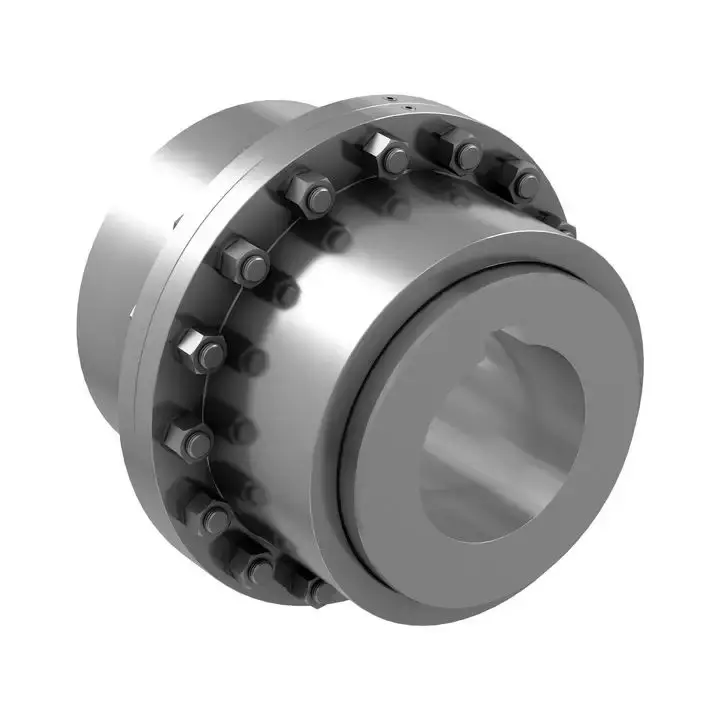
How does a flexible coupling help in power transmission efficiency?
Flexible couplings play a crucial role in improving power transmission efficiency in various mechanical systems. Here are the ways in which flexible couplings contribute to enhanced efficiency:
- Misalignment Compensation: In real-world applications, it is challenging to achieve perfect alignment between shafts due to manufacturing tolerances, thermal expansion, or external forces. Flexible couplings can accommodate both angular and parallel misalignments between the driving and driven shafts. By doing so, they ensure that the torque is transmitted smoothly and efficiently despite misalignment, reducing power losses due to misaligned shafts.
- Vibration Damping: Vibrations in mechanical systems can lead to energy losses and premature wear of components. Flexible couplings with vibration-damping properties can absorb and dampen vibrations generated during operation. By reducing the transmission of vibrations, these couplings help to maintain power transmission efficiency and extend the lifespan of connected equipment.
- Shock Load Absorption: During start-up or sudden changes in operating conditions, equipment may experience shock loads. Flexible couplings are designed to absorb and cushion these shock loads, preventing sudden impacts on the system. By minimizing the shock load’s effect, flexible couplings contribute to smoother power transmission and reduced stress on components.
- Torsional Stiffness: While flexible couplings allow for misalignment compensation, they still exhibit a certain degree of torsional stiffness. This stiffness ensures that the majority of the torque is efficiently transmitted from the driving to the driven shaft, minimizing power losses due to deformation or bending of the coupling.
- Reduced Friction and Wear: Flexible couplings typically have a simple design with fewer moving parts. This simplicity leads to reduced friction and wear compared to more complex coupling types. Lower friction means less energy dissipation, resulting in improved power transmission efficiency.
- Compatibility with Various Applications: Flexible couplings come in a wide range of designs and materials to suit different applications. Whether it’s high-speed machinery, heavy-duty equipment, or precision systems, there are flexible coupling options optimized for each use case. Selecting the appropriate coupling for the specific application ensures efficient power transmission.
In summary, flexible couplings enhance power transmission efficiency by compensating for misalignment, damping vibrations, absorbing shock loads, providing torsional stiffness, reducing friction and wear, and offering compatibility with diverse applications. The combination of these features contributes to improved overall system efficiency and helps optimize the performance of mechanical systems.
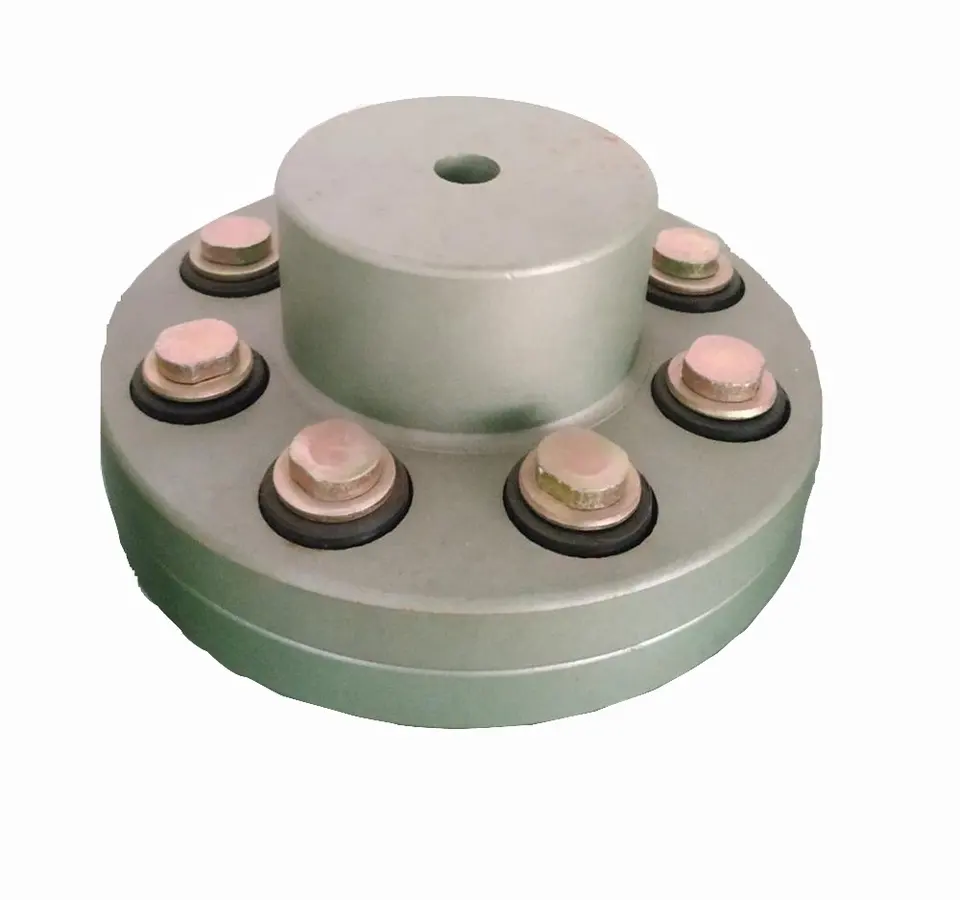
How does a flexible coupling help in torque and rotational speed control?
A flexible coupling plays a crucial role in torque and rotational speed control in rotating machinery. It offers several benefits that contribute to efficient power transmission and help maintain desired operating conditions:
- Torque Transmission: Flexible couplings transmit torque from one shaft to another while accommodating misalignments. They provide a reliable connection that allows the driving shaft to transfer rotational force (torque) to the driven shaft without causing undue stress on the connected components.
- Smooth Power Transmission: Flexible couplings help reduce shocks and vibrations that can occur during startup, shutdown, or sudden load changes. By damping these vibrations, the coupling ensures smooth power transmission and protects the connected equipment from unnecessary wear.
- Rotational Speed Control: In certain applications, especially those involving precision motion control, maintaining consistent rotational speed is critical. Flexible couplings can help by minimizing backlash and torsional wind-up. Backlash refers to the play or gap between the coupling’s components, while torsional wind-up is the twisting deformation that can occur under torque load. Flexible couplings with low backlash and high torsional stiffness contribute to accurate rotational speed control.
- Compensation for Misalignment: Rotating machinery may experience misalignment due to various factors such as thermal expansion, foundation settling, or machining tolerances. Flexible couplings accommodate angular, parallel, and axial misalignments, which helps in maintaining proper alignment between the shafts and reduces unnecessary torque variations.
- Protection from Overloads: Flexible couplings can act as a mechanical fuse by disengaging or slipping when subjected to excessive torque loads. This feature protects the connected components from damage caused by sudden overloads or jamming events.
- Energy Efficiency: Certain types of flexible couplings, such as elastomeric couplings or beam couplings, have low mass and inertia. This characteristic reduces energy losses and contributes to overall system efficiency.
By providing reliable torque transmission, smooth power transfer, rotational speed control, and compensation for misalignment, flexible couplings optimize the performance and longevity of rotating machinery. Additionally, they enhance the safety and efficiency of various industrial processes by protecting equipment from excessive loads and ensuring smooth operation in diverse applications.
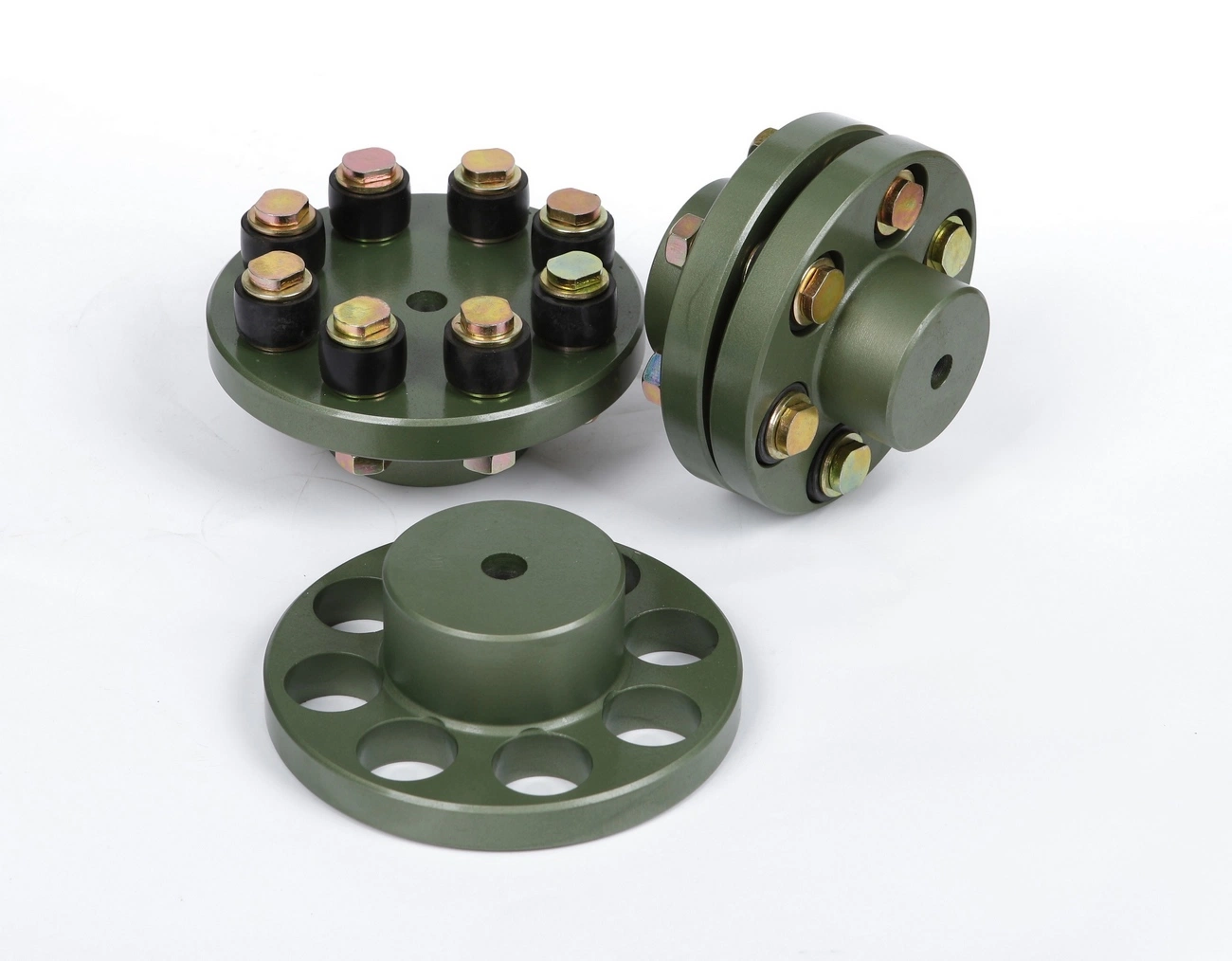
Can flexible couplings accommodate high torque and high-speed applications?
Yes, flexible couplings can accommodate both high torque and high-speed applications, but the suitability depends on the specific design and material of the flexible coupling. Different types of flexible couplings have varying torque and speed capacities, and it’s crucial to select the right type of coupling based on the application requirements.
High Torque Applications:
Some flexible couplings, such as gear couplings and disc couplings, are designed to handle high torque levels. Gear couplings consist of toothed hubs that mesh with each other, providing a robust and efficient torque transmission. They are commonly used in heavy-duty industrial applications, such as steel mills, mining equipment, and power generation plants, where high torque loads are prevalent.
Disc couplings are also suitable for high torque applications. They use a series of flexible metal discs that can handle significant torque while compensating for misalignment. Disc couplings are often used in high-speed machinery and critical applications where precise torque transmission is essential.
High-Speed Applications:
Flexible couplings can also be used in high-speed applications. For instance, certain disc couplings, elastomeric couplings, and grid couplings are capable of handling high rotational speeds. These couplings have low inertia, which means they can respond quickly to changes in speed and provide efficient power transmission at high RPMs.
Elastomeric couplings, such as jaw couplings and tire couplings, are commonly used in various industrial applications, including pumps, compressors, and fans, where both torque and speed requirements are high. They offer good flexibility and damping properties, making them suitable for applications with high-speed variations and vibrations.
Considerations:
When selecting a flexible coupling for high torque and high-speed applications, several factors should be considered:
- The torque and speed ratings provided by the coupling manufacturer should be checked to ensure they meet or exceed the application’s requirements.
- The design and materials of the coupling should be suitable for the specific operating conditions, including temperature, environment, and potential exposure to corrosive substances.
- Proper alignment and installation of the coupling are critical to ensure optimal performance and prevent premature wear.
- In some cases, it may be necessary to use additional components, such as torque limiters or speed reducers, to protect the coupling and the connected equipment from excessive loads or speed fluctuations.
In conclusion, flexible couplings can indeed accommodate high torque and high-speed applications, but the appropriate coupling type and proper selection are essential to ensure reliable and efficient performance in these demanding conditions.


editor by CX 2024-02-25