
Product Description
XL Types High-Pressure Rubber Flexible Spider Jaw Coupling
XL Type Flexible Spider Jaw Coupling comprises a convex claw block that can be avoided due to external constraints, internal deformation, and centrifugal impact deformation; in concave-convex claw, the pressure on the surface of the involute tooth is very small, even under overload, the tooth will not wear or deformation.
Flexible jaw couplings are used in power transmission of industrial equipment such as metallurgy, mining, lifting, transportation, petroleum, chemical industry, shipbuilding, textile, light industry, agricultural machinery, and industrial equipment such as pumps, fans, compressors, machine tools, gearboxes, mixers, printing machines, and conveyors.
Advantage:
Run smoothly;
Easy to install;
Compensate displacement (axial, radial, angular);
XL Star Type Flexible Coupling Main Dimension:
| Type | Nominal torque Tn/N·m |
Shaft hole diameter | L | D | D1 | B1 | S | |
| d1,d2 | Y | J1,Z1 | ||||||
| XL1 | 20 | 6,7 | 18 | – | 40 | 32 | 12 | 2 |
| 8,9 | 22 | – | ||||||
| 10,11 | 25 | 22 | ||||||
| 12,14 | 32 | 27 | ||||||
| 16,18,19 | 42 | 30 | ||||||
| XL2 | 71 | 8,9 | 22 | – | 55 | 40 | 14 | |
| 10,11 | 25 | 22 | ||||||
| 12,14 | 32 | 27 | ||||||
| 16,18,19 | 42 | 30 | ||||||
| 20,22,24 | 52 | 38 | ||||||
| XL3 | 200 | 10,11 | 25 | 22 | 65 | 48 | 15 | 2.5 |
| 12,14 | 32 | 27 | ||||||
| 16,18,19 | 42 | 30 | ||||||
| 20,22,24 | 52 | 38 | ||||||
| 25,28 | 62 | 44 | ||||||
| XL4 | 400 | 12,14 | 32 | 27 | 80 | 66 | 18 | 3 |
| 16,18,19 | 42 | 30 | ||||||
| 20,22,24 | 52 | 38 | ||||||
| 25,28 | 62 | 44 | ||||||
| 30,32,35,38 | 82 | 60 | ||||||
| XL5 | 560 | 14 | 32 | 27 | 95 | 75 | 20 | |
| 16,18,19 | 42 | 30 | ||||||
| 20,22,24 | 52 | 38 | ||||||
| 25,28 | 62 | 44 | ||||||
| 30,32,35,38 | 82 | 60 | ||||||
| 40,42 | 112 | 84 | ||||||
| XL6 | 630 | 16,18,19 | 42 | 30 | 105 | 85 | 21 | 3.5 |
| 20,22,24 | 52 | 38 | ||||||
| 25,28 | 62 | 44 | ||||||
| 30,32,35,38 | 82 | 60 | ||||||
| 40,42,45,48 | 112 | 84 | ||||||
| XL7 | 800 | 20,22,24 | 52 | 38 | 120 | 98 | 22 | 4 |
| 25,28 | 62 | 44 | ||||||
| 30,32,35,38 | 82 | 60 | ||||||
| 40,42,45,48,50,55 | 112 | 84 | ||||||
| XL8 | 900 | 22,24 | 52 | 38 | 135 | 115 | 26 | 4.5 |
| 25,28 | 62 | 44 | ||||||
| 30,32,35,38 | 82 | 60 | ||||||
| 40,42,45,48,50,55 | 112 | 84 | ||||||
| 60,63,65 | 142 | 107 | ||||||
| XL9 | 2000 | 30,32,35,38 | 82 | 60 | 160 | 135 | 30 | 5 |
| 40,42,45,48,50,55,56 | 112 | 84 | ||||||
| 60,63,65,70,71,75 | 142 | 107 | ||||||
| XL10 | 5000 | 40,42,45,48,50,55,56 | 112 | 84 | 200 | 160 | 34 | 5.5 |
| 60,63,65,70,71,75 | 142 | 107 | ||||||
| 80,85,90 | 172 | 132 | ||||||
| XL11 | 7100 | 50,55,56 | 112 | 84 | 225 | 180 | 38 | 6 |
| 60,63,65,70,71,75 | 142 | 107 | ||||||
| 80,85,90,95 | 172 | 132 | ||||||
| 100 | 212 | 167 | ||||||
| XL12 | 8000 | 60,63,65,70,71,75 | 142 | 107 | 255 | 200 | 42 | 6.5 |
| 80,85,90,95 | 172 | 132 | ||||||
| 100,110 | 212 | 167 | ||||||
| XL13 | 10000 | 60,63,65,70,71,75 | 142 | 107 | 290 | 230 | 46 | 7 |
| 80,85,90,95 | 172 | 132 | ||||||
| 100,110,120,125 | 212 | 167 | ||||||
| XL14 | 14000 | 60,63,65,70,71,75 | 142 | 107 | 320 | 255 | 50 | 7.5 |
| 80,85,90,95 | 172 | 132 | ||||||
| 100,110,120,125 | 212 | 167 | ||||||
| 130,140 | 252 | 202 | ||||||
| XL15 | 20000 | 80,85,90,95 | 172 | 132 | 370 | 290 | 57 | 9 |
| 100,110,120,125 | 212 | 167 | ||||||
| 130,140,150 | 252 | 202 | ||||||
| 160 | 302 | 242 | ||||||
| XL16 | 25000 | 85,90,95 | 172 | 132 | 420 | 325 | 64 | 10.5 |
| 100,110,120,125 | 212 | 167 | ||||||
| 130,140,150 | 252 | 202 | ||||||
| 160,170,180 | 302 | 242 |
Product Show:
♦Other Products List
| Transmission Machinery Parts Name |
Model |
| Universal Coupling | WS, WSD, WSP |
| Cardan Shaft | SWC, SWP, SWZ |
| Tooth Coupling | CL, CLZ, GCLD, GIICL, GICL, NGCL, GGCL, GCLK |
| Disc Coupling | JMI, JMIJ, JMII, JMIIJ |
| High Flexible Coupling | LM |
| Chain Coupling | GL |
| Jaw Coupling | LT |
| Grid Coupling | JS |
♦Our Company
Our company supplies different kinds of products. High quality and reasonable price. We stick to the principle of “quality first, service first, continuous improvement and innovation to meet the customers” for the management and “zero defect, zero complaints” as the quality objective. To perfect our service, we provide products of good quality at a reasonable price.
Welcome to customize products from our factory and please provide your design drawings or contact us if you need other requirements.
♦Our Services
1. Design Services
Our design team has experience in coupling relating to product design and development. If you have any needs for your new product or wish to make further improvements, we are here to offer our support.
2. Product Services
raw materials → Cutting → Forging →Rough machining →Shot blasting →Heat treatment →Testing →Fashioning →Cleaning→ Assembly→Packing→Shipping
3. Samples Procedure
We could develop the sample according to your requirement and amend the sample constantly to meet your need.
4. Research & Development
We usually research the new needs of the market and develop new models when there are new cars in the market.
5. Quality Control
Every step should be a special test by Professional Staff according to the standard of ISO9001 and TS16949.
♦FAQ
Q 1: Are you a trading company or a manufacturer?
A: We are a professional manufacturer specializing in manufacturing
various series of couplings.
Q 2:Can you do OEM?
Yes, we can. We can do OEM & ODM for all the customers with customized artwork in PDF or AI format.
Q 3:How long is your delivery time?
Generally, it is 20-30 days if the goods are not in stock. It is according to quantity.
Q 4: Do you provide samples? Is it free or extra?
Yes, we could offer the sample but not for free. Actually, we have an excellent price principle, when you make the bulk order then the cost of the sample will be deducted.
Q 5: How extended is your warranty?
A: Our Warranty is 12 months under normal circumstances.
Q 6: What is the MOQ?
A: Usually our MOQ is 1pcs.
Q 7: Do you have inspection procedures for coupling?
A:100% self-inspection before packing.
Q 8: Can I have a visit to your factory before the order?
A: Sure, welcome to visit our factory.
Q 9: What’s your payment?
A:1) T/T.
♦Contact Us
Web: huadingcoupling
Add: No.11 HangZhou Road,Chengnan park,HangZhou City,ZheJiang Province,China
/* March 10, 2571 17:59:20 */!function(){function s(e,r){var a,o={};try{e&&e.split(“,”).forEach(function(e,t){e&&(a=e.match(/(.*?):(.*)$/))&&1
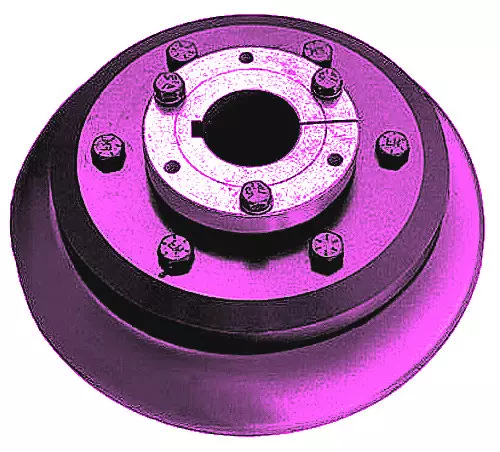
Can flexible couplings be used in hydraulic and pneumatic systems?
Yes, flexible couplings can be used in both hydraulic and pneumatic systems to connect various components and transmit power or motion. However, the selection of flexible couplings for these systems depends on specific application requirements and operating conditions.
Hydraulic Systems:
- Compensating Misalignment: In hydraulic systems, flexible couplings are used to compensate for misalignment between the driving and driven components, such as pumps, motors, and actuators. Misalignment can occur due to variations in the mounting or movement of components. The flexibility of the coupling allows it to accommodate misalignment while transmitting torque efficiently.
- Vibration Damping: Hydraulic systems can generate vibrations during operation, which can affect the performance and lifespan of connected components. Flexible couplings with vibration-damping properties help reduce the transmission of vibrations, providing smoother operation and minimizing wear on components.
- Reducing Shock Loads: Flexible couplings absorb and dampen shock loads that may occur in hydraulic systems during rapid starts, stops, or pressure fluctuations. By absorbing these shock loads, the coupling protects connected components from potential damage.
- Corrosion Resistance: Hydraulic systems may operate in environments with exposure to hydraulic fluids, which can be corrosive. Flexible couplings made of materials resistant to corrosion, such as stainless steel or specific polymers, are suitable for such applications.
- High Torque Transmission: Hydraulic systems often require high torque transmission between the power source and the driven components. Flexible couplings can handle high torque levels while accommodating angular and axial misalignments.
Pneumatic Systems:
- Compensation for Misalignment: In pneumatic systems, flexible couplings provide compensation for misalignment between components, such as pneumatic cylinders, valves, and rotary actuators. The ability to accommodate misalignment ensures smooth operation and reduces the risk of mechanical stress on the system.
- Minimal Lubrication: Some flexible couplings designed for pneumatic systems require little to no lubrication, making them suitable for applications where oil or grease contamination is undesirable.
- Low Inertia: Pneumatic systems often require components with low inertia to achieve rapid response times. Flexible couplings with low mass and low inertia help maintain the system’s responsiveness and efficiency.
- High Torque Transmission: Pneumatic systems can demand high torque transmission between components, such as in pneumatic rotary actuators. Flexible couplings can transmit torque effectively while compensating for potential misalignments.
- Corrosion Resistance: Pneumatic systems operating in harsh environments may be exposed to moisture or chemicals. Flexible couplings made of corrosion-resistant materials are ideal for such conditions.
Overall, flexible couplings are versatile components that can be used in a wide range of hydraulic and pneumatic applications. When selecting a flexible coupling for a specific system, it’s essential to consider factors such as misalignment compensation, vibration damping, shock absorption, corrosion resistance, torque transmission capability, and compatibility with the system’s operating conditions.
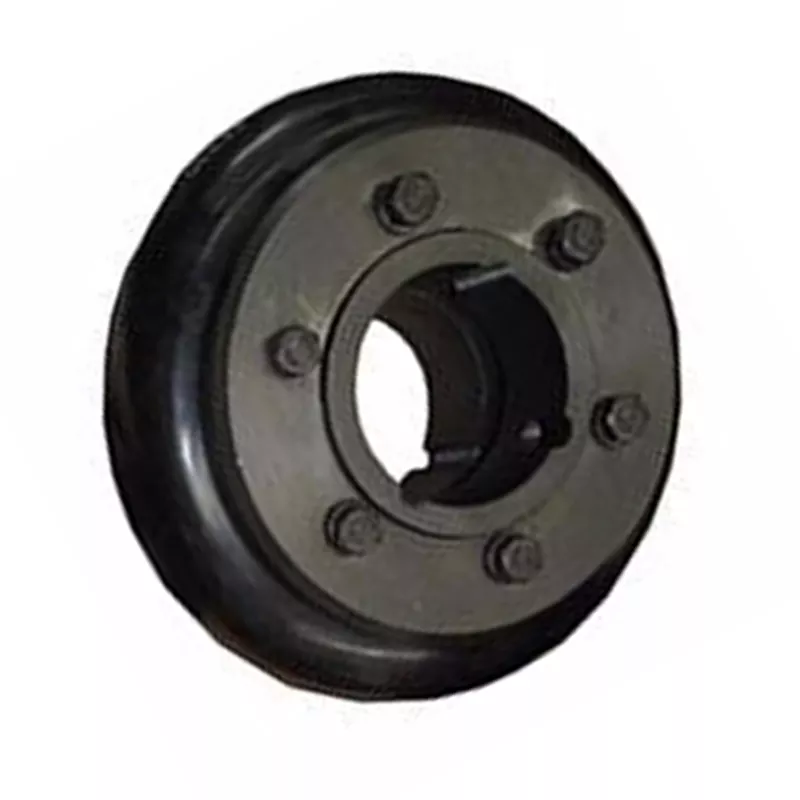
Can flexible couplings be used in pumps, compressors, and fans?
Yes, flexible couplings can be used in pumps, compressors, and fans, and they are commonly employed in these types of rotating machinery. Flexible couplings offer several advantages that make them suitable for such applications:
- Misalignment Compensation: Pumps, compressors, and fans often experience misalignments due to various factors, such as thermal expansion, foundation settling, or component wear. Flexible couplings can accommodate angular, parallel, and axial misalignments, helping to maintain proper alignment between the driving and driven components.
- Vibration Damping: Flexible couplings help dampen vibrations in rotating machinery, which is essential for smooth operation and reduced wear on components. In pumps, compressors, and fans, vibration control is crucial to prevent premature failure and maintain reliable performance.
- Shock Load Absorption: These rotating machines may encounter shock loads during startup or shutdown, especially in reciprocating equipment like reciprocating pumps or compressors. Flexible couplings can absorb and mitigate the impact of such loads, protecting the connected equipment from damage.
- Reduced Maintenance: Flexible couplings with elastomeric elements or other self-lubricating features require minimal maintenance, leading to cost savings and reduced downtime in pumps, compressors, and fans.
- Energy Efficiency: Certain flexible coupling designs, such as beam couplings or certain elastomeric couplings, have low mass and inertia. This characteristic helps improve the energy efficiency of rotating machinery, which is particularly beneficial in large-scale pumps, compressors, and fans used in industrial applications.
- Adaptability: Pumps, compressors, and fans often have varying operating conditions and load profiles. Flexible couplings are adaptable to different operating environments, making them suitable for diverse applications.
In summary, flexible couplings offer several performance-enhancing features that make them well-suited for use in pumps, compressors, and fans. Their ability to accommodate misalignment, dampen vibrations, absorb shocks, and reduce maintenance requirements contributes to improved reliability, efficiency, and longevity of the connected rotating machinery.
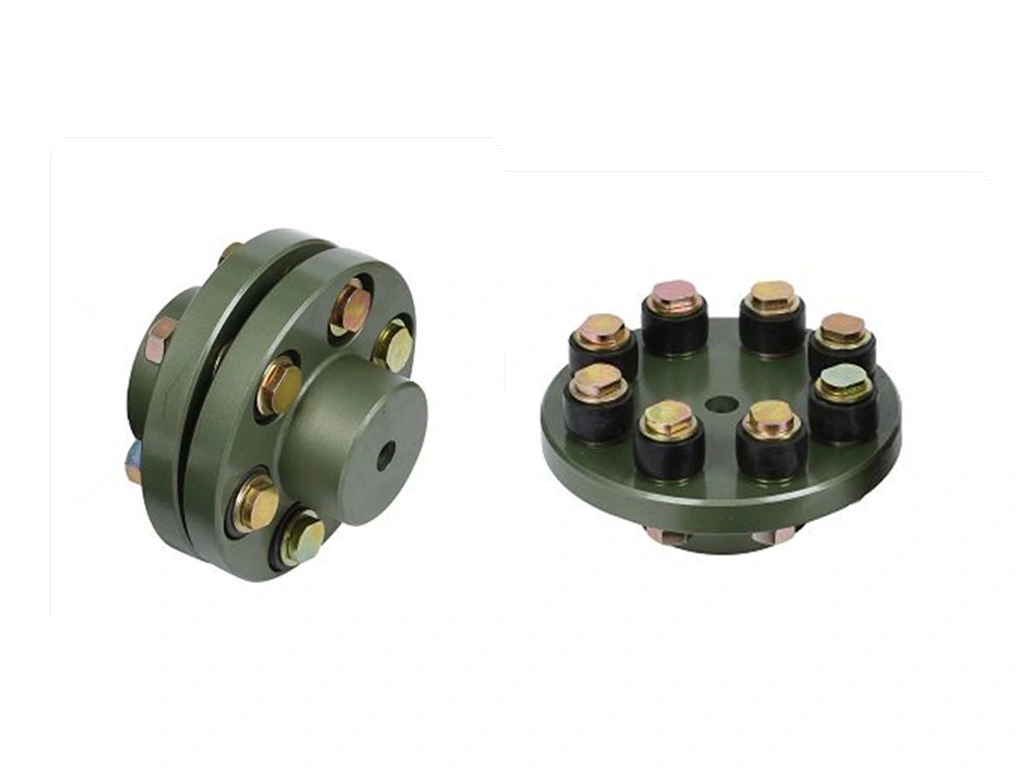
What are the factors to consider when choosing a flexible coupling for a specific system?
Choosing the right flexible coupling for a specific system requires careful consideration of several factors. The following are the key factors that should be taken into account:
- 1. Misalignment Requirements: Assess the type and magnitude of misalignment expected in the system. Different couplings are designed to handle specific types of misalignment, such as angular, parallel, or axial misalignment. Choose a coupling that can accommodate the expected misalignment to prevent premature wear and failure.
- 2. Torque Capacity: Determine the required torque capacity of the coupling to ensure it can transmit the necessary power between the shafts. Consider both the continuous and peak torque loads that the system may experience.
- 3. Operating Speed: Take into account the rotational speed of the system. High-speed applications may require couplings that can handle the additional centrifugal forces and balance requirements.
- 4. Temperature Range: Consider the operating temperature range of the system. Select a coupling material that can withstand the temperatures encountered without losing its mechanical properties.
- 5. Environment and Conditions: Evaluate the environmental conditions where the coupling will be used, such as exposure to moisture, chemicals, dust, or corrosive substances. Choose a coupling material that is compatible with the operating environment.
- 6. Space Constraints: Assess the available space for the coupling installation. Some couplings have compact designs suitable for applications with limited space.
- 7. Installation and Maintenance: Consider the ease of installation and maintenance. Some couplings may require special tools or disassembly for maintenance, while others offer quick and simple installation.
- 8. Torsional Stiffness: Evaluate the torsional stiffness of the coupling. A balance between flexibility and stiffness is essential to prevent excessive torsional vibrations while accommodating misalignment.
- 9. Shock and Vibration Damping: For applications with high shock loads or vibration, select a coupling with excellent damping characteristics to protect the system from excessive forces.
- 10. Cost and Budget: Compare the cost of the coupling with the overall budget for the system. Consider the long-term cost implications, including maintenance and replacement expenses.
Ultimately, the choice of a flexible coupling should align with the specific requirements and operating conditions of the system. Consulting with coupling manufacturers or engineering experts can provide valuable insights to ensure the optimal selection of a coupling that enhances system performance, reliability, and efficiency.


editor by CX 2024-02-17