
Product Description
Universal Wide Range Flexible Ductile Iron Straight Coupling
| MATERIALS | ||
| ITEM | PARTS | MATERIAL |
| 1 | Body | BSEN1563 EN-GJS(QT)-450-10/Carbon Steel |
| 2 | Gland | BSEN1563 EN-GJS(QT)-450-10 |
| 3 | Seals | EPDM/NBR |
| 4 | Fasteners | Stainless Steel/Carbon Steel with Dacromet Coating/GAL Carbon Steel |
| 5 | Coating | Fusion Bonded Epoxy |
| DIMENSIONS(PN10/PN16) | ||||||||||
| DN | RANGE | L | L1 | H | ID | ID1 | OD | N-MSXL1 | BOLT TORQUE | WIGHT(KG) |
| (mm) | (mm) | (mm) | (mm) | (mm) | (mm) | (mm) | (mm) | (Nm) | ||
| 50 | 59-72 | 188 | 148 | 95 | 72 | 76 | 153 | 4-M12*180 | 55-65 | 4.1 |
| 65 | 72-85 | 188 | 148 | 95 | 85 | 89 | 173 | 4-M12*180 | 55-65 | 4.1 |
| 80 | 88-103 | 188 | 146 | 95 | 103 | 107 | 185 | 4-M12*180 | 55-65 | 4.1 |
| 100 | 109-128 | 188 | 146 | 95 | 127 | 132 | 208 | 4-M12*180 | 55-65 | 4.6 |
| 125 | 138-153 | 198 | 153 | 95 | 158 | 162 | 256 | 4-M12*190 | 55-65 | 8.3 |
| 150 | 159-182 | 198 | 153 | 95 | 182 | 186 | 280 | 4-M12*190 | 55-65 | 8.5 |
| 175 | 189-212 | 233 | 187 | 130 | 211 | 216 | 329 | 4-M12*225 | 55-65 | 9.0 |
| 200 | 218-235 | 233 | 187 | 130 | 234 | 239 | 333 | 4-M12*225 | 55-65 | 10.6 |
| 225 | 242-262 | 233 | 185 | 130 | 261 | 265 | 379 | 6-M12*225 | 55-65 | 14.5 |
| 250 | 272-289 | 233 | 186 | 130 | 288 | 295 | 391 | 6-M12*225 | 55-65 | 15.4 |
| 300 | 315-349 | 233 | 187 | 130 | 349 | 352 | 464 | 6-M12*225 | 55-65 | 20.0 |
| 322-339 | 233 | 187 | 130 | 338 | 345 | 444 | 6-M12*225 | 55-65 | 23.1 | |
| 338-360 | 233 | 187 | 130 | 359 | 366 | 460 | 6-M12*225 | 55-65 | 23.1 | |
| 350 | 351-391 | 250 | 187 | 130 | 390 | 395 | 502 | 10-M12*225 | 55-65 | 26.8 |
| 400 | 400-442 | 250 | 187 | 130 | 441 | 446 | 558 | 10-M12*225 | 55-65 | 31.9 |
| 450 | 455-493 | 250 | 187 | 130 | 492 | 497 | 608 | 10-M12*225 | 55-65 | 36.6 |
| 500 | 500-599 | 250 | 187 | 130 | 598 | 594 | 662 | 10-M12*225 | 55-65 | 40.0 |
| 600 | 600-692 | 250 | 187 | 130 | 691 | 697 | 768 | 10-M12*225 | 55-65 | 42.0 |
| 700 | 708-780 | 250 | 187 | 130 | 779 | 785 | 910 | 10-M12*225 | 55-65 | 45.0 |
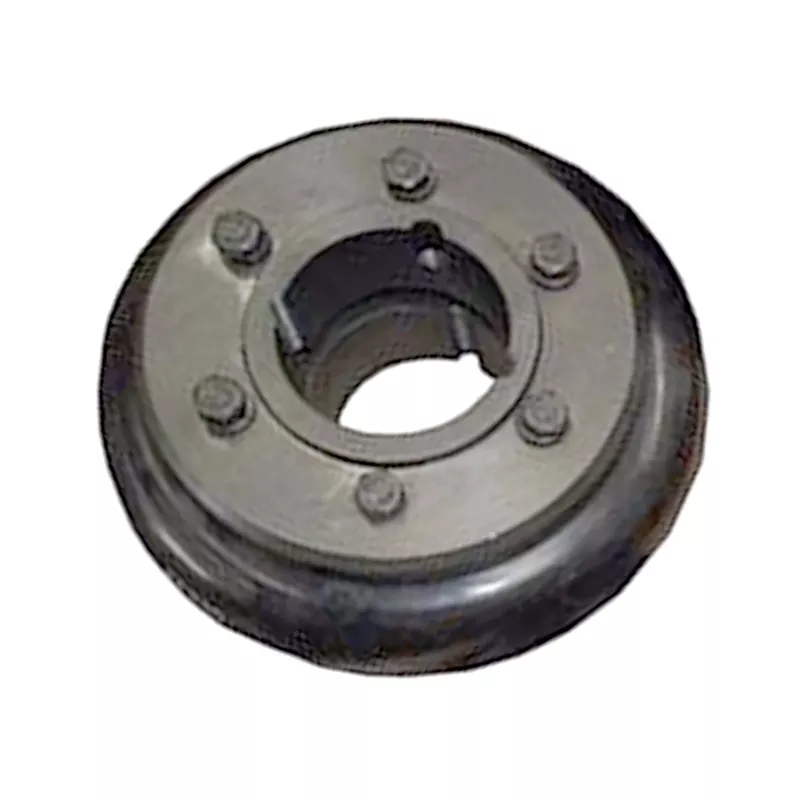
What are the temperature and environmental limitations of flexible couplings?
Flexible couplings are designed to operate within certain temperature and environmental limitations to ensure optimal performance and longevity. The specific limitations may vary depending on the type and material of the coupling. Here are the general considerations:
- Temperature Range: The temperature range in which a flexible coupling can operate is crucial. High temperatures can affect the material properties, leading to reduced flexibility and potential failure. Low temperatures can cause the material to become brittle and lose its ability to accommodate misalignment. It’s essential to choose a coupling suitable for the intended temperature range of the application.
- Corrosive Environments: In environments with corrosive substances, such as acids, chemicals, or saltwater, it is essential to select a flexible coupling made of materials that are resistant to corrosion. Stainless steel and certain polymers are commonly used in such environments to prevent degradation and maintain the coupling’s integrity.
- Hygienic Environments: For applications in food processing, pharmaceuticals, or cleanrooms, hygienic design is critical. Flexible couplings used in these environments should be easy to clean, made of materials that are non-toxic and resistant to contamination, and free from crevices or pockets where debris can accumulate.
- Explosive or Hazardous Atmospheres: In environments where explosive or hazardous gases, vapors, or dust are present, flexible couplings with anti-static properties or explosion-proof certifications may be necessary to prevent the risk of ignition and ensure safety.
- Outdoor Applications: For outdoor installations, flexible couplings should be able to withstand exposure to weather conditions, UV radiation, and temperature fluctuations. Couplings with weather-resistant properties are suitable for such applications.
- High-Speed Applications: In high-speed applications, the centrifugal forces on the flexible coupling increase with rotational speed. Couplings designed for high-speed applications should be balanced to minimize vibrations and ensure smooth operation.
- Shock and Impact Loads: Flexible couplings used in applications with significant shock or impact loads should have the ability to dampen and absorb these forces to protect connected equipment from damage.
- Continuous vs. Intermittent Duty: Some flexible couplings are designed for continuous-duty applications, while others are suitable for intermittent duty or start-stop operations. The coupling’s design and material should match the specific duty cycle requirements.
It is essential to consult with the coupling manufacturer or supplier to understand the temperature and environmental limitations of a specific coupling model. Proper selection and application of flexible couplings within their defined limitations contribute to reliable and efficient performance in various industrial and mechanical systems.
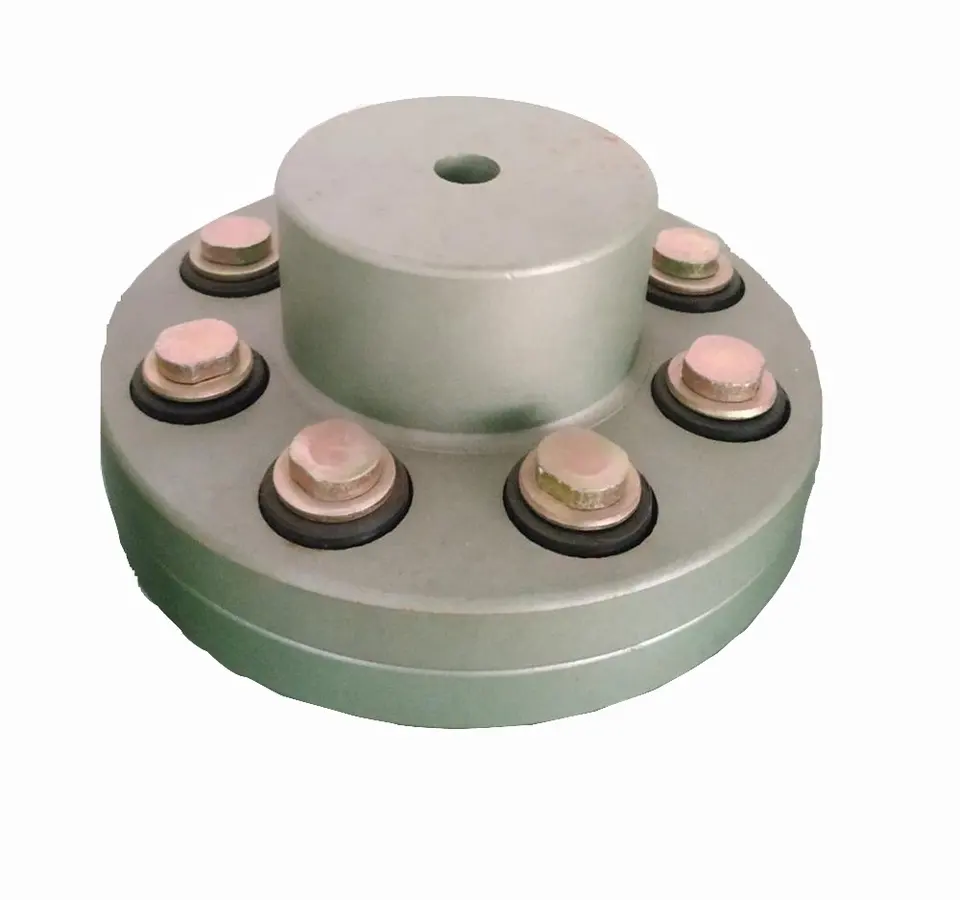
How does a flexible coupling help in torque and rotational speed control?
A flexible coupling plays a crucial role in torque and rotational speed control in rotating machinery. It offers several benefits that contribute to efficient power transmission and help maintain desired operating conditions:
- Torque Transmission: Flexible couplings transmit torque from one shaft to another while accommodating misalignments. They provide a reliable connection that allows the driving shaft to transfer rotational force (torque) to the driven shaft without causing undue stress on the connected components.
- Smooth Power Transmission: Flexible couplings help reduce shocks and vibrations that can occur during startup, shutdown, or sudden load changes. By damping these vibrations, the coupling ensures smooth power transmission and protects the connected equipment from unnecessary wear.
- Rotational Speed Control: In certain applications, especially those involving precision motion control, maintaining consistent rotational speed is critical. Flexible couplings can help by minimizing backlash and torsional wind-up. Backlash refers to the play or gap between the coupling’s components, while torsional wind-up is the twisting deformation that can occur under torque load. Flexible couplings with low backlash and high torsional stiffness contribute to accurate rotational speed control.
- Compensation for Misalignment: Rotating machinery may experience misalignment due to various factors such as thermal expansion, foundation settling, or machining tolerances. Flexible couplings accommodate angular, parallel, and axial misalignments, which helps in maintaining proper alignment between the shafts and reduces unnecessary torque variations.
- Protection from Overloads: Flexible couplings can act as a mechanical fuse by disengaging or slipping when subjected to excessive torque loads. This feature protects the connected components from damage caused by sudden overloads or jamming events.
- Energy Efficiency: Certain types of flexible couplings, such as elastomeric couplings or beam couplings, have low mass and inertia. This characteristic reduces energy losses and contributes to overall system efficiency.
By providing reliable torque transmission, smooth power transfer, rotational speed control, and compensation for misalignment, flexible couplings optimize the performance and longevity of rotating machinery. Additionally, they enhance the safety and efficiency of various industrial processes by protecting equipment from excessive loads and ensuring smooth operation in diverse applications.
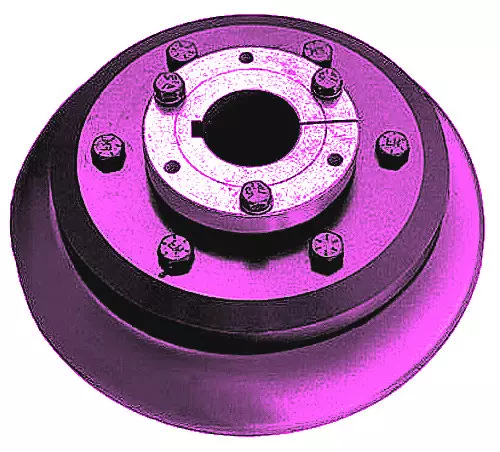
What is a flexible coupling and how does it work?
A flexible coupling is a mechanical device used to connect two shafts while allowing for relative movement between them. It is designed to transmit torque from one shaft to another while compensating for misalignment, vibration, and shock. Flexible couplings are essential components in various rotating machinery and systems, as they help protect the connected equipment and enhance overall performance.
Types of Flexible Couplings:
There are several types of flexible couplings, each with its unique design and characteristics. Some common types include:
- Jaw Couplings: Jaw couplings feature elastomer spiders that fit between two hubs. They can accommodate angular and parallel misalignment while dampening vibrations.
- Disc Couplings: Disc couplings use thin metallic discs to connect the shafts. They are highly flexible and provide excellent misalignment compensation.
- Gear Couplings: Gear couplings use gear teeth to transmit torque. They offer high torque capacity and can handle moderate misalignment.
- Beam Couplings: Beam couplings use a single piece of flexible material, such as a metal beam, to transmit torque while compensating for misalignment.
- Bellows Couplings: Bellows couplings use a bellows-like structure to allow for axial, angular, and parallel misalignment compensation.
- Oldham Couplings: Oldham couplings use three discs, with the middle one having a perpendicular slot to allow for misalignment compensation.
How a Flexible Coupling Works:
The operation of a flexible coupling depends on its specific design, but the general principles are similar. Let’s take the example of a jaw coupling to explain how a flexible coupling works:
- Two shafts are connected to the coupling hubs on either side, with an elastomer spider placed between them.
- When torque is applied to one shaft, it causes the spider to compress and deform slightly, transmitting the torque to the other shaft.
- In case of misalignment between the shafts, the elastomer spider flexes and compensates for the misalignment, ensuring smooth torque transmission without imposing excessive loads on the shafts or connected equipment.
- The elastomer spider also acts as a damping element, absorbing vibrations and shocks during operation, which reduces wear on the equipment and enhances system stability.
Overall, the flexibility and ability to compensate for misalignment are the key features that allow a flexible coupling to function effectively. The choice of a specific flexible coupling type depends on the application’s requirements, such as torque capacity, misalignment compensation, and environmental conditions.


editor by CX 2023-08-22