
Product Description
| Item No. | φD | L | W | L1 | M | Tighten the strength(N.m) |
| SG7-8-C19- | 19.5 | 20 | 1.2 | 9.4 | M2.5 | 1 |
| SG7-8-C26- | 26 | 25.5 | 2.5 | 11.5 | M3 | 1.5 |
| SG7-8-C34- | 34 | 32.3 | 3.3 | 14.5 | M4 | 1.5 |
| SG7-8-C39- | 39 | 34.1 | 4.1 | 15 | M4 | 2.5 |
| SG7-8-C44- | 44 | 34.5 | 4.5 | 15 | M4 | 2.5 |
| SG7-8-C50- | 50 | 40.5 | 4.5 | 18 | M5 | 7 |
| SG7-8-C56- | 56 | 45 | 5 | 20 | M5 | 7 |
| SG7-8-C68- | 68 | 54 | 6 | 24 | M6 | 12 |
| SG7-8-C82- | 82 | 68 | 8 | 30 | M8 | 16 |
| SG7-8-C94- | 94 | 68 | 8 | 30 | M8 | 28 |
| SG7-8-C104- | 104 | 70 | 10 | 30 | M8 | 28 |
| Item No. | Rated torque | Maximum Torque | Max Speed | Inertia Moment | N.m rad | RRO | Tilting Tolerance | End-play | Weight:(g) |
| SG7-8-C19- | 1N.m | 2N.m | 10000prm | 0.65×10⁻⁶kg.m² | 200N.m/rad | 0.04mm | 1c | ±0.2mm | 12 |
| SG7-8-C26- | 1.4N.m | 2.8N.m | 10000prm | 1.8×10⁻⁶kg.m² | 690N.m/rad | 0.04mm | 1c | ±0.2mm | 31 |
| SG7-8-C34- | 2.8N.m | 5.6N.m | 10000prm | 7.2×10⁻⁶kg.m² | 1650N.m/rad | 0.04mm | 1c | ±0.2mm | 64 |
| SG7-8-C39- | 5.8N.m | 11.6N.m | 10000prm | 1.8×10⁻⁵kg.m² | 2500N.m/rad | 0.04mm | 1c | ±0.2mm | 97 |
| SG7-8-C44- | 8.7N.m | 17.4N.m | 10000prm | 2.5×10⁻⁵kg.m² | 2900N.m/rad | 0.04mm | 1c | ±0.2mm | 113 |
| SG7-8-C50- | 15N.m | 30N.m | 10000prm | 8.2×10⁻⁵kg.m² | 6700N.m/rad | 0.04mm | 1c | ±0.2mm | 195 |
| SG7-8-C56- | 25N.m | 50N.m | 10000prm | 1×10⁻⁴kg.m² | 8400N.m/rad | 0.04mm | 1c | ±0.2mm | 263 |
| SG7-8-C68- | 55N.m | 110N.m | 10000prm | 1.9×10⁻⁴kg.m² | 11500N.m/rad | 0.04mm | 1c | ±0.2mm | 445 |
| SG7-8-C82- | 80N.m | 160N.m | 10000prm | 7×10⁻⁴kg.m² | 14550N.m/rad | 0.04mm | 1c | ±0.2mm | 892 |
| SG7-8-C94- | 185N.m | 370N.m | 10000prm | 1.23×10⁻³kg.m² | 16900N.m/rad | 0.04mm | 1c | ±0.2mm | 950 |
| SG7-8-C104- | 255N.m | 510N.m | 10000prm | 1.86×10⁻³kg.m² | 25100N.m/rad | 0.04mm | 1c | ±0.2mm | 1190 |
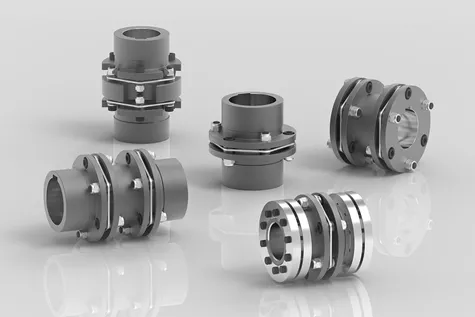
Common Applications of Disc Couplings
Disc couplings find extensive use across various industries and applications where reliable torque transmission, misalignment compensation, and torsional stiffness are essential. Some notable examples include:
- Industrial Machinery: Disc couplings are employed in industrial equipment such as pumps, compressors, generators, and conveyors. They ensure precise torque transfer and alignment in heavy-duty machinery.
- Power Generation: Gas turbines, steam turbines, and power generators often utilize disc couplings to transmit torque between components while withstanding high rotational speeds.
- Aerospace: In aircraft and spacecraft, disc couplings help connect critical systems like engines and auxiliary power units, ensuring dependable torque transmission in demanding environments.
- Marine: Ships and offshore platforms use disc couplings to connect propulsion systems, generators, and other machinery, even in conditions with variable loads and misalignments.
- Oil and Gas: Disc couplings play a crucial role in drilling rigs, pumps, and other equipment where reliable torque transmission and misalignment compensation are vital.
- Automotive: Some automotive applications use disc couplings to connect components within drivetrains and transmissions, especially in vehicles with high-performance requirements.
These examples highlight the versatility and importance of disc couplings in various industries where precise torque transmission, misalignment handling, and torsional stiffness are critical for optimal performance.
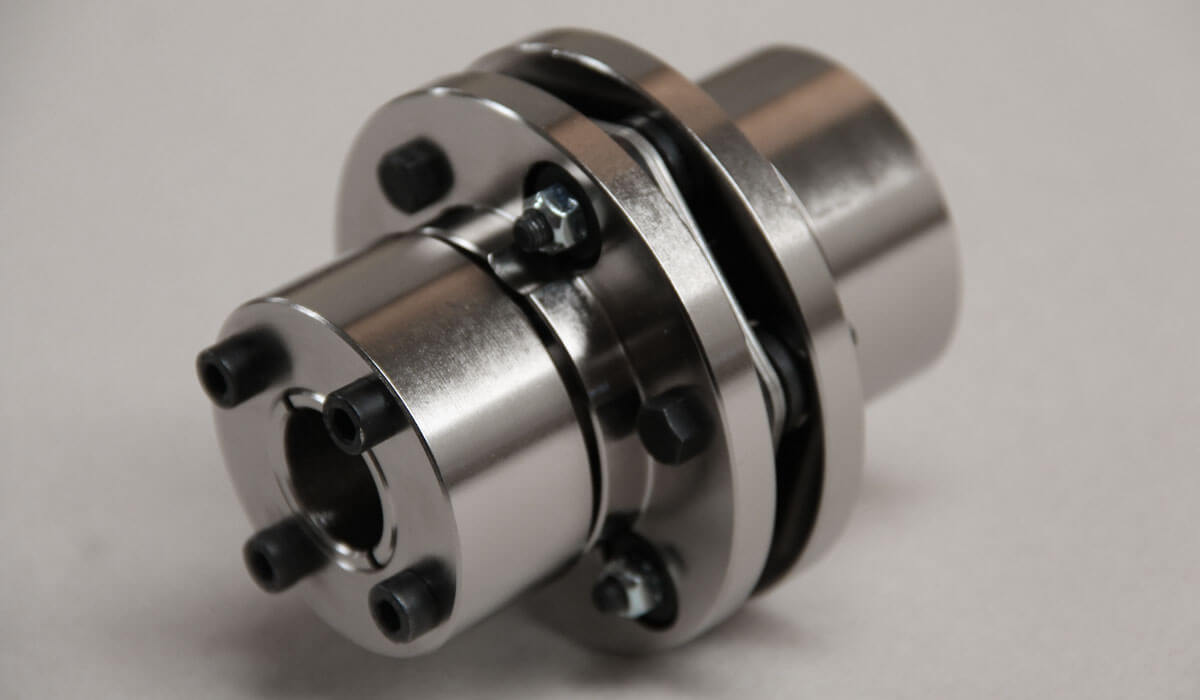
Unique Construction of Disc Couplings for Vibration Dampening and Resonance Control
The distinctive construction of disc couplings plays a vital role in their ability to dampen vibrations and control resonance:
- Flexible Disc Packs: Disc couplings consist of multiple thin metal discs stacked alternately. These discs are connected to the hub and spacer, creating a flexible structure that can absorb and dissipate vibrations.
- Radial Compliance: The flexible discs allow for radial compliance, enabling the coupling to absorb misalignments and shocks, which helps prevent the transmission of vibrations.
- Torsional Flexibility: The flexible nature of the disc packs provides torsional flexibility, allowing the coupling to absorb torsional vibrations and shocks that may arise from the machinery.
- Resonance Damping: The design of disc couplings helps dampen resonant frequencies. The unique construction disperses energy across the flexible elements, reducing the risk of resonant vibration buildup.
- Material Selection: The choice of materials for the discs plays a role in controlling resonance. The right combination of material properties can help mitigate the effects of resonance.
By efficiently absorbing and dissipating vibrations and controlling resonance, disc couplings contribute to smoother operation, reduced wear and tear on machinery components, and enhanced overall system performance.
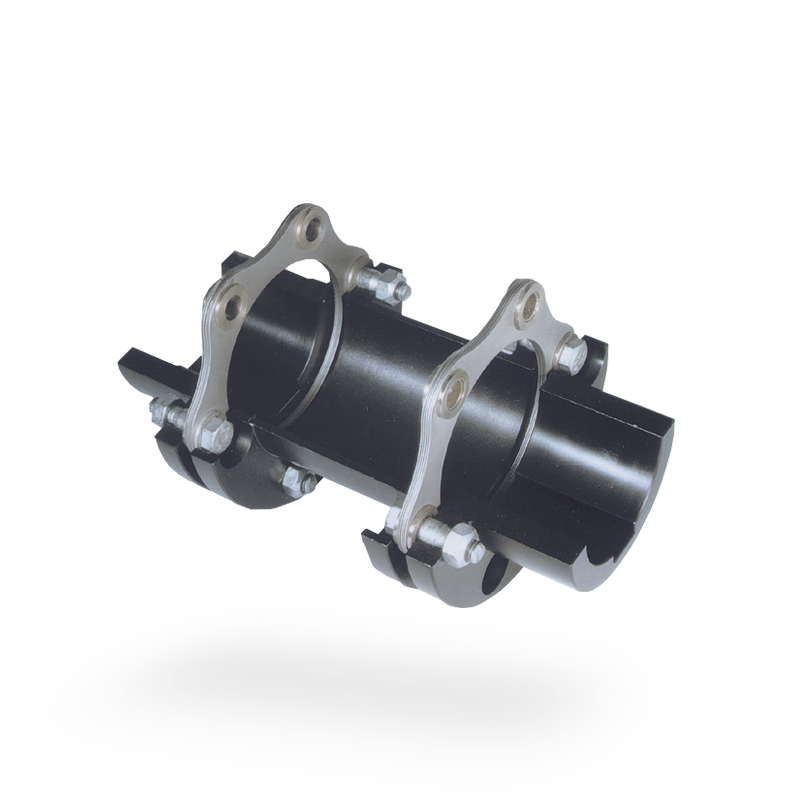
Design of Disc Couplings for Flexibility and Performance
The design of disc couplings plays a crucial role in providing flexibility and ensuring high-performance torque transmission. Key design elements include:
- Flexibility: Disc couplings consist of multiple thin metal discs arranged in a pack. These discs have slots or cuts that create segments, allowing them to flex and accommodate misalignment. The flexing action provides flexibility in multiple directions, allowing the coupling to handle angular, parallel, and axial misalignment.
- Torsional Stiffness: While providing flexibility, disc couplings also maintain a certain degree of torsional stiffness. This stiffness ensures efficient torque transmission between the shafts and helps maintain accurate positioning in precision applications.
- Material Selection: High-quality materials with appropriate mechanical properties are used to manufacture the discs. These materials must balance flexibility, torsional stiffness, and strength. Stainless steel and other alloys are commonly chosen for their durability and resilience.
- Geometry and Slot Patterns: The design of the slots or cuts in the discs influences the coupling’s flexibility and misalignment capabilities. Engineers optimize the geometry to provide the desired levels of flexibility and torsional stiffness.
- Spacer Elements: Some disc couplings include spacer elements between the discs. These spacers contribute to accurate alignment between the shafts and help prevent edge contact between the discs, reducing wear and enhancing durability.
- Balancing: Balancing the disc coupling reduces vibration and rotational imbalance. Precision machining and balancing techniques ensure that the coupling operates smoothly at various speeds, minimizing stress on the connected machinery.
- Anti-Flailing Designs: In the event of a disc failure, anti-flailing designs prevent the discs from dislodging and causing damage to surrounding equipment or posing a safety hazard.
The combination of these design aspects results in a disc coupling that can handle misalignment, transmit torque efficiently, dampen vibrations, and maintain its performance over a wide range of operating conditions. The flexible yet robust design makes disc couplings suitable for various industrial applications.


editor by CX 2023-09-14