
Product Description
Product Name:
Flexible coupling for connecting fire protection pipe
Material:
Ductile cast iron conforming to ASTM A536
Approval:
UL listed & FM approved
also wen can manufacture different sizes according to client’s requirements.
Sizes available:
| Nominal size | Pipe O.D. | Working pressure | Dimensions | Bolt size | ||||||||
| ∅ | L | H | ||||||||||
| mm | in | mm | in | PSI | Mpa | mm | in | mm | in | mm | in | mm |
| 25 | 1 | 33.7 | 1.327 | 300 | 2.07 | 55.6 | 2.188 | 98 | 3.858 | 44 | 1.732 | M10*45 |
| 32 | 1 1/4 | 42.4 | 1.699 | 300 | 2.07 | 66 | 2.598 | 107 | 4.213 | 44 | 1.732 | M10*45 |
| 40 | 1 1/2 | 48.3 | 1.9 | 300 | 2.07 | 74 | 2.913 | 115 | 4.527 | 44 | 1.732 | M10*45 |
| 50 | 2 | 60.3 | 2.372 | 300 | 2.07 | 84 | 3.307 | 124 | 4.882 | 44 | 1.732 | M10*55 |
| 65 | 2 1/2 | 73 | 2.875 | 300 | 2.07 | 98 | 3.858 | 138 | 5.433 | 45 | 1.772 | M10*55 |
| 65 | 2 1/2 | 76.1 | 3 | 300 | 2.07 | 100 | 3.937 | 143 | 5.63 | 45 | 1.772 | M10*55 |
| 80 | 3 | 88.9 | 3.5 | 300 | 2.07 | 114 | 4.488 | 157 | 6.181 | 45 | 1.772 | M10*55 |
| 100 | 4 | 114.3 | 4.5 | 300 | 2.07 | 140 | 5.512 | 187 | 7.362 | 50 | 1.899 | M10*65 |
| 125 | 5 | 139.7 | 5.5 | 300 | 2.07 | 172 | 6.771 | 220 | 8.661 | 50 | 1.899 | M12*70 |
| 125 | 5 | 141.3 | 5.563 | 300 | 2.07 | 172 | 6.771 | 220 | 8.661 | 50 | 1.899 | M12*75 |
| 150 | 6 | 165.1 | 6.5 | 300 | 2.07 | 197 | 7.756 | 252 | 9.921 | 51 | 2.008 | M12*75 |
| 150 | 6 | 168.3 | 6.625 | 300 | 2.07 | 197 | 7.756 | 255 | 10.039 | 51 | 2.008 | M12*75 |
| 200 | 8 | 219.1 | 8.625 | 300 | 2.07 | 254 | 10 | 330 | 12.992 | 61 | 2.405 | M16*100 |
| 250 | 10 | 273 | 10.75 | 300 | 2.07 | 317 | 12.48 | 397.8 | 15.661 | 62 | 2.441 | M20*110 |
| 300 | 12 | 323.9 | 12.751 | 300 | 2.07 | 370 | 14.566 | 457 | 17.992 | 60 | 2.362 | M20*120 |
We can manufacture different sizes according to your requirements.
About US:
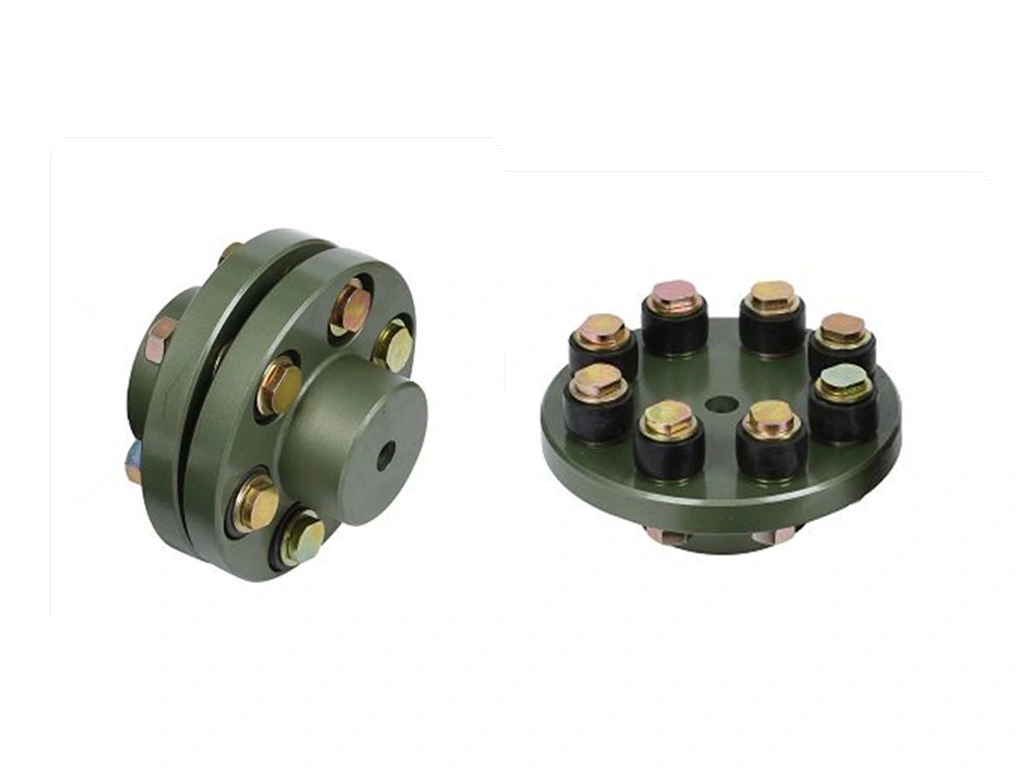
Can flexible couplings be used in precision motion control systems?
Yes, flexible couplings can be used in precision motion control systems, but careful consideration must be given to their selection and application. Precision motion control systems require high accuracy, repeatability, and minimal backlash. Flexible couplings can play a crucial role in such systems when chosen appropriately and used in the right conditions.
Selection Criteria: When selecting a flexible coupling for a precision motion control system, several key factors should be considered:
- Backlash: Look for couplings with minimal or no backlash to ensure accurate motion transmission and precise positioning.
- Torsional Stiffness: Choose a coupling with sufficient torsional stiffness to minimize torsional deflection and maintain accurate motion control.
- Misalignment Compensation: Ensure the coupling can accommodate the required misalignment without introducing significant variations in motion accuracy.
- Dynamic Performance: Evaluate the coupling’s dynamic behavior under varying speeds and loads to ensure smooth and precise motion control during operation.
- Material and Construction: Consider the material and construction of the coupling to ensure it can withstand the specific environmental conditions and loads of the motion control system.
- Size and Space Constraints: Choose a compact and lightweight coupling that fits within the available space and does not add excessive inertia to the system.
Applications: Flexible couplings are commonly used in precision motion control systems, such as robotics, CNC machines, semiconductor manufacturing equipment, optical systems, and high-precision measurement instruments. They help transmit motion from motors to various components, such as lead screws, spindles, or precision gears, while compensating for misalignments and providing shock and vibration absorption.
Specialized Couplings: For ultra-high precision applications, specialized couplings, such as zero-backlash or torsionally rigid couplings, may be preferred. These couplings are designed to provide precise motion transmission without any play or torsional deflection, making them suitable for demanding motion control tasks.
Installation and Alignment: Proper installation and alignment are critical to achieving optimal performance in precision motion control systems. Precise alignment of the coupling and connected components helps maintain accurate motion transmission and minimizes eccentricities that could impact the system’s precision.
Summary: Flexible couplings can indeed be used in precision motion control systems when chosen and applied correctly. By considering factors like backlash, torsional stiffness, misalignment compensation, and dynamic performance, users can select the right coupling to ensure high accuracy, repeatability, and reliable motion control in their specific application.
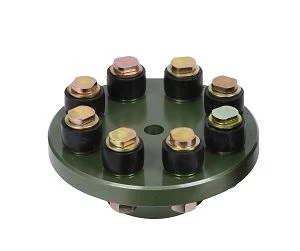
What are the differences between single and double flexible coupling designs?
Single and double flexible couplings are two common designs used for power transmission in various mechanical systems. Here are the main differences between the two:
- Design: The primary difference lies in their configuration. A single flexible coupling consists of one flexible element connecting two shafts, while a double flexible coupling, also known as a two-piece flexible coupling, uses two flexible elements with an intermediate shaft in between. The double flexible coupling resembles two single couplings connected in series.
- Torsional Flexibility: Single flexible couplings typically provide greater torsional flexibility than double flexible couplings. The presence of an intermediate shaft in the double coupling design adds some rigidity and reduces the overall torsional flexibility of the system.
- Compensation of Misalignment: Both single and double flexible couplings can compensate for angular and parallel misalignment between shafts. However, due to its additional flexible element, the double flexible coupling may have slightly better misalignment compensation capabilities.
- Length and Space: Single flexible couplings are generally shorter in length compared to double flexible couplings. The double flexible coupling’s design requires additional space to accommodate the intermediate shaft, making it longer than the single coupling.
- Shaft Separation: Single flexible couplings connect the two shafts directly without any intermediate components, while the double flexible coupling separates the shafts using an intermediate shaft. This shaft separation in the double design can be advantageous in certain applications.
- Stiffness: The double flexible coupling tends to be slightly stiffer than the single flexible coupling due to the presence of the intermediate shaft, which may affect its ability to absorb vibrations and shock loads.
- Application: Single flexible couplings are commonly used in various applications, including pumps, compressors, fans, and general power transmission systems. Double flexible couplings are often preferred in applications where a higher level of torsional stiffness is required, such as certain industrial machinery.
Both single and double flexible coupling designs have their advantages and are suitable for different types of machinery and power transmission requirements. The choice between the two depends on factors such as the specific application, the level of misalignment compensation needed, the available space, and the desired torsional flexibility for the system.
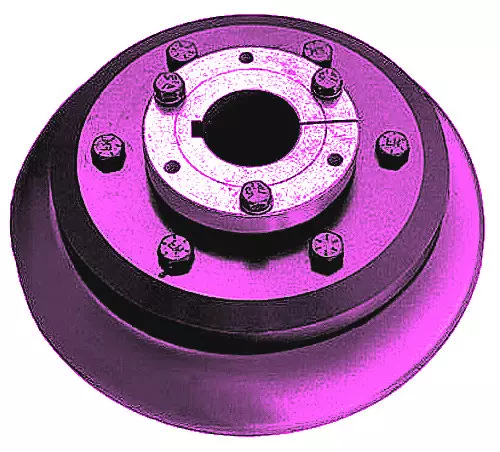
What is a flexible coupling and how does it work?
A flexible coupling is a mechanical device used to connect two shafts while allowing for relative movement between them. It is designed to transmit torque from one shaft to another while compensating for misalignment, vibration, and shock. Flexible couplings are essential components in various rotating machinery and systems, as they help protect the connected equipment and enhance overall performance.
Types of Flexible Couplings:
There are several types of flexible couplings, each with its unique design and characteristics. Some common types include:
- Jaw Couplings: Jaw couplings feature elastomer spiders that fit between two hubs. They can accommodate angular and parallel misalignment while dampening vibrations.
- Disc Couplings: Disc couplings use thin metallic discs to connect the shafts. They are highly flexible and provide excellent misalignment compensation.
- Gear Couplings: Gear couplings use gear teeth to transmit torque. They offer high torque capacity and can handle moderate misalignment.
- Beam Couplings: Beam couplings use a single piece of flexible material, such as a metal beam, to transmit torque while compensating for misalignment.
- Bellows Couplings: Bellows couplings use a bellows-like structure to allow for axial, angular, and parallel misalignment compensation.
- Oldham Couplings: Oldham couplings use three discs, with the middle one having a perpendicular slot to allow for misalignment compensation.
How a Flexible Coupling Works:
The operation of a flexible coupling depends on its specific design, but the general principles are similar. Let’s take the example of a jaw coupling to explain how a flexible coupling works:
- Two shafts are connected to the coupling hubs on either side, with an elastomer spider placed between them.
- When torque is applied to one shaft, it causes the spider to compress and deform slightly, transmitting the torque to the other shaft.
- In case of misalignment between the shafts, the elastomer spider flexes and compensates for the misalignment, ensuring smooth torque transmission without imposing excessive loads on the shafts or connected equipment.
- The elastomer spider also acts as a damping element, absorbing vibrations and shocks during operation, which reduces wear on the equipment and enhances system stability.
Overall, the flexibility and ability to compensate for misalignment are the key features that allow a flexible coupling to function effectively. The choice of a specific flexible coupling type depends on the application’s requirements, such as torque capacity, misalignment compensation, and environmental conditions.


editor by CX 2023-09-04